
খন্দকার মোফাখখার হোসেন
সহকারী শিক্ষক
২২ নভেম্বর, ২০২১ ০৬:৪৭ পূর্বাহ্ণ
সহকারী শিক্ষক
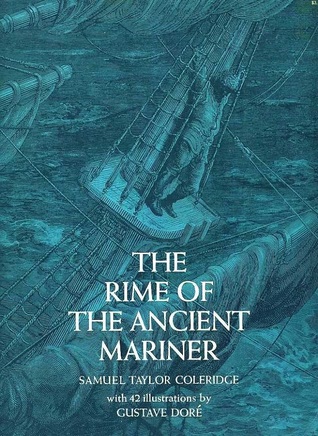
“The Rime of the Ancient Mariner,” by Samuel Taylor Coleridge. The speaker, a sailor on a becalmed ship, is surrounded by salt water that he cannot drink.
The verses relate the experiences of a sailor returned from a long sea journey. During his voyage the ship he is on is becalmed in uncharted waters near the equator. Those aboard are tormented to death by thirst. At the same time, the ship itself is floating in the solution to the crew's problems.
" Water, water, everywhere/And all the boards did shrink/water, water, everywhere/nor any drop to drink" water is everywhere because they are in the middle of the sea; the saltwater is eating away at the wood; they can't drink the saltwater so they are dehydrated.
There is Polluted water everywhere and There is no drinking water it's because of pollution.
Explanation:
· It's well known that earth is 71% water, but only 0.5% is drinkable (freshwater).
· Most of the water is in oceans and seas.
· Water from rivers, lakes, and glaciers are freshwater which used for drinking water.
· Freshwater is scarce because of global warming.
· Melting of glaciers leads to an increase in water level in seas and oceans.
· The Oceans are saline or salty because of the several natural occurrences.
· Industries wastes are also present in water which creates water pollution.
in this poem is that of death, repentance, and resurrection. There is a considerable amount of Christian symbolism in the poem as well as outright allusions to Christianity, with many passages to suggest this is a theme of the work.
boards did shrink; Water, water, every where, Nor any drop to drink. A phrase from “The Rime of the Ancient Mariner” written by an English poet, Samuel Taylor Coleridge (Coleridge, 1798). The poem told a story of a ship which set sail and adrift to Antarctica by a storm. Luckily an albatross help guide the ship out of Antarctica but the mariner shot the albatross dead with his crossbow. The incident brought bad luck to the ship as the wind stop blowing causing their ship to halt in the middle of the ocean. At this stage where the mariner came out with the phrase which shows his frustration that although he is surrounded by water, he cannot drink the water to clench his thirst since they are salt water which is unsuitable for drinking. The poem latter narrate about the ship crew dies one by one leaving only the mariner as he latter regrets his mistake and start to appreciate marine life. The mariner then prays and the curse lifted allowing the mariner to find his way back to shore (Shmoop Editorial Team, 2008).
The earth is made up of 70% water and 97.5% of it is salt water which is not consumable. That leaves us with only 2.5% of fresh water and 70% of the fresh water comes in the form of icecaps in Antarctica and Iceland. Only less than 1% of the fresh water is accessible which were river, lakes, reservoirs and shallow underground water with the rest of the fresh water are soil moisture and deep underground water that is not accessible. Luckily, the little source of fresh water that we have is being replenished by rain water thus reducing the chance of water exhaustion (University of Michigan, 2006). Although this is true for most part of the world, we cannot assume that rain replenish fresh...
... middle of paper ...
...s is done by Singapore with their NEWater project. NEWater is recycled sewage water which is treated using advance technology like Microfiltration, Reverse Osmosis in a semi-permeable membrane and UV disinfection which makes the final product safe for drinking (PUB, 2013). Singapore also opened a Seawater Desalination plant in 2005 which hopes to explore the possibility of turning seawater into freshwater by biomimicry which is mimicking the biological processes of mangrove plants and euryhaline fish extract seawater using minimal energy since the current Reverse Osmosis technique of changing sea water to salt water is said to be energy consuming (Henley, 2013). We also can plan the water usage and use the water efficiently at home to contribute in sustaining the freshwater source of the globe so that the next generation will not have to suffer from water shortage.
“Water, water, everywhere, And all the boards did shrink; Water, water, everywhere, Nor any drop to drink . . . ” From the “Rime of the Ancient Mariner” by the 19th Century English Poet, Samuel Taylor Coleridge in his lengthy 1798 poem, once pondered by all who studied English Literature.
This sad tale originated the bad omen involving “an albatross around his neck,” reflecting the Mariner’s punishment after the crew blamed him for killing the bird as the cause of them being marooned at sea without wind to sail, deprived of fresh water and surrounded by undrinkable salt water.
Without dwelling on the content and meaning of the Mariner’s story, this situation reminds me of the possible plight of Americans following the loss of the electric power grid for an indefinite period — which unless they have taken prior precautions could leave them without potable water. And today we have not taken those precautions.
Who/what would the survivors then blame for their most unwelcome condition?
Consider the alarming situation described by a recent National Infrastructure Advisory Council (NIAC) report on “Water Sector Resilience.”
The NIAC advises the President on the security and resilience of the critical infrastructure sectors and their functional systems, physical assets and cyber networks. These sectors span the U.S. economy, including Water; Chemicals; Communications; Critical Manufacturing; Dams; Defense Industrial Base; Emergency Services; Energy; Financial; Food and Agriculture; Government Facilities; Healthcare and Public Health; Information Technology; Nuclear Reactors, Materials and Waste; and Transportation Systems.
As highlighted below in a figure from the Executive Summary of the NIAC report on water sector resilience, many of these sectors could be significantly degraded within a few hours after the loss of water, which could occur following a major loss of electricity — e.g., after an electromagnetic pulse (EMP) event and when diesel fuel used to power emergency generators runs out.
Moreover, the loss of water directly affects the health of citizens and their ability to survive. The NIAC reports that 92-percent of the U.S. population is served by 20-percent of the 51,000 Community Water Systems (CWSs). The other 8-percent of the U.S. population is served by CWSs that serve less than 3300 people each. More than 18,000 non-transient Non-CWSs serve schools, factories, office buildings and hospitals that have their own water systems. And there are 84,000 transient Non-CWSs at gas stations, campgrounds, and other places where people usually do not remain for long periods.
The NIAC report also provides a dismal picture of the situation for wastewater services. When water and wastewater services are lost, even for short periods, the consequences can be widespread and dramatic. When lost for an extended period, the results can be catastrophic as suggested below.
The NIAC report identified the Water/Wastewater sector as one of the “lifeline sectors” because its functions are essential to core operations in nearly every other critical sector. When lost even for a short period (less than eight hours) the functioning of multiple sectors is significantly degraded, as illustrated in the first figure above. Especially of concern is the impact on the Water/Wastewater sector when electricity, communications and transportation are disrupted. Key interdependencies include the:
· Chemical Sector — Chemicals are required to operate water/wastewater treatment facilities and water is often necessary in chemical manufacturing processes.
· Energy Sector — The Energy Sector relies on water services for different aspects of energy production and generation. The water sector relies on electricity to operate its pumps, treatment facilities, delivery systems and processing. Long-term power outages can overwhelm a water utility’s backup energy supply or deplete fuel reserves — a scenario made worse if the outage is systemic and multiple utilities in a region are shut down (as in an EMP event) or when multiple water utilities have to compete for scarce backup resources. The order in which disrupted sectors obtain energy services may be an issue as water utilities work to restore services.
· Communications and Information and Technology (IT) Sectors — These sectors rely on water services for equipment cooling and facility operations, while the Water Sector relies on Communications and IT for their operations and control systems, monitoring systems, internal communications, and communications with the public and emergency responders.
· Transportation Sector — Chemicals and other supplies are delivered by truck and rail. Water Sector personnel relay on transportation to get to and from work.
The NIAC report states that it is impossible to store sufficient backup water resources to maintain water-intensive operations in places such as hospitals, office buildings, chemical plants, generators and manufacturing facilities. Unlike electricity, water cannot easily be rerouted around disruptions, nor can facilities generate backup water onsite to maintain critical operations.
The rermainder of the NIAC report continues to review the conditions demonstrating the deterioration of capabilities throughout this critical “lifeline” sector — and the lack of current programs to repair the identified deficiencies. Key findings encompassing the challenges, needs and stratregies for improving security and resilience within the Water Sector were associafted with:
· Poor Understanding of the Criticality of the Water Sector
· Inadequate Valuation of Water Services
· Wide Disparity of Capabilities and Resources
· Significant Underinvestment in Water Resilience
· Fragmented and Weak Federal Support for Water Resilience
· Regional Collaboration Not Broadly Applied.
I again encourage our readers to consider at least the Executive Summary of the NIAC report, including for its abbreviated recommendations. A note of caution is that the conditions considered by the NIAC did not include the impact of a major shutdown of the electric power grid — which would assure catestrophic consequences, currently of indefinite duration.
When considering the impact of losing the water-wastewater sector, it is easy to understand why members of the EMP Commission testified that such a major loss of the electric power grid — which would lead to the loss of the water-wastewater sector and other key critical infrastructure — could lead to the death of most Americans within a year.
Clean water is vitally important for survival — and having sewage begin to back up within a day or so of lost power will lead to conditions that cause life threatening diseases. Chaos and societal collapse would no doubt follow the extended loss of water and wastewater, unless the current situation is rectified.
As with the Ancient Mariner, “Water, water every where, nor any drop to drink . . .” Unless we fix this mess, we too will deserve to have an albatross wrapped around our collective neck.






৫৩
৯১ মন্তব্য