
এলএম আছহাব উদ্দিন হৃদয়
সিনিয়র শিক্ষক

২৮ আগস্ট, ২০২৪ ০৯:৪৩ অপরাহ্ণ
সিনিয়র শিক্ষক
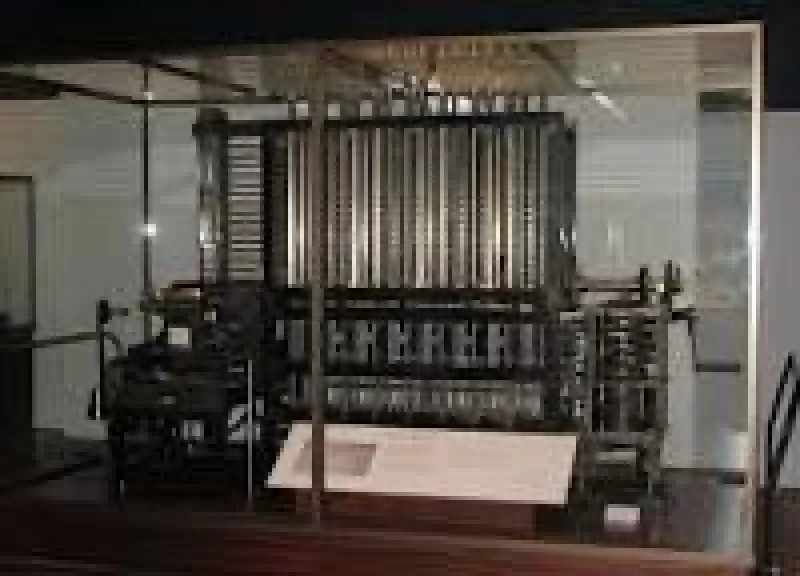
Charles Babbage began to construct a small difference engine in c. 1819 and had completed it by 1822 (Difference Engine 0). He announced his invention on 14 June 1822, in a paper to the Royal Astronomical Society, entitled "Note on the application of machinery to the computation of astronomical and mathematical tables". This machine used the decimal number system and was powered by cranking a handle. The British government was interested, since producing tables was time-consuming and expensive and they hoped the difference engine would make the task more economical.
In 1823, the British government gave Babbage £1700 to start work on the project. Although Babbage's design was feasible, the metalworking techniques of the era could not economically make parts in the precision and quantity required. Thus the implementation proved to be much more expensive and doubtful of success than the government's initial estimate. According to the 1830 design for Difference Engine No. 1, it would have about 25,000 parts, weigh 4 tons, and operate on 20-digit numbers by sixth-order differences. In 1832, Babbage and Joseph Clement produced a small working model (one-seventh of the plan), which operated on 6-digit numbers by second-order differences. Lady Byron described seeing the working prototype in 1833: "We both went to see the thinking machine (or so it seems) last Monday. It raised several Nos. to the 2nd and 3rd powers, and extracted the root of a Quadratic equation." Work on the larger engine was suspended in 1833.
By the time the government abandoned the project in 1842, Babbage had received and spent over £17,000 on development, which still fell short of achieving a working engine. The government valued only the machine's output (economically produced tables), not the development (at unpredictable cost) of the machine itself. Babbage refused to recognize that predicament. Meanwhile, Babbage's attention had moved on to developing an analytical engine, further undermining the government's confidence in the eventual success of the difference engine. By improving the concept as an analytical engine, Babbage had made the difference engine concept obsolete, and the project to implement it an utter failure in the view of the government.
The incomplete Difference Engine No. 1 was put on display to the public at the 1862 International Exhibition in South Kensington, London.
Babbage went on to design his much more general analytical engine, but later designed an improved "Difference Engine No. 2" design (31-digit numbers and seventh-order differences), between 1846 and 1849. Babbage was able to take advantage of ideas developed for the analytical engine to make the new difference engine calculate more quickly while using fewer parts.






৪
৭ মন্তব্য