রোকসানা আক্তার
সিনিয়র শিক্ষক

০৫ নভেম্বর, ২০২৪ ১১:১২ অপরাহ্ণ
সিনিয়র শিক্ষক
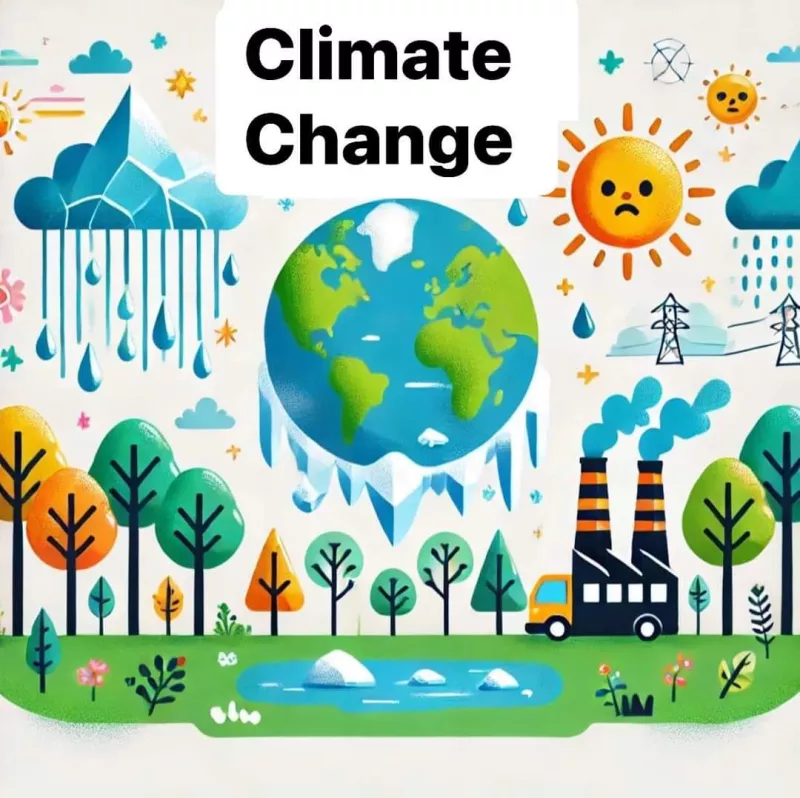
✅ Here are 50 important questions and answers about climate change in English, suitable for general understanding:
1-10
1. What is climate change?
• Climate change refers to long-term changes in temperature, precipitation, and weather patterns on Earth.
2. What causes climate change?
• It’s primarily caused by human activities like burning fossil fuels, deforestation, and industrial processes.
3. What is global warming?
• Global warming is the increase in Earth’s average temperature due to greenhouse gases.
4. How does climate change affect the environment?
• It causes melting ice caps, rising sea levels, and extreme weather events.
5. What are greenhouse gases?
• Greenhouse gases like CO₂, methane, and nitrous oxide trap heat in the Earth’s atmosphere.
6. Why are greenhouse gases harmful?
• They contribute to global warming and disrupt natural climate systems.
7. What is the greenhouse effect?
• It’s the process by which greenhouse gases trap heat in the atmosphere, warming the Earth.
8. What human activities increase greenhouse gases?
• Burning fossil fuels, agriculture, deforestation, and industrial processes.
9. What is carbon dioxide (CO₂)?
• CO₂ is a greenhouse gas released mainly from burning fossil fuels and deforestation.
10. How does deforestation contribute to climate change?
• Trees absorb CO₂; cutting them releases CO₂ back into the atmosphere.
11-20
11. What is methane, and why is it harmful?
• Methane is a potent greenhouse gas from agriculture, waste, and energy production.
12. What is climate mitigation?
• Efforts to reduce or prevent greenhouse gas emissions.
13. What is climate adaptation?
• Adjusting to climate impacts to minimize damage to communities and ecosystems.
14. What is the Paris Agreement?
• A global treaty to limit global warming to below 2°C above pre-industrial levels.
15. What are renewable energy sources?
• Renewable energy comes from natural sources like solar, wind, and hydro, which don’t emit CO₂.
16. How does climate change affect animals?
• It disrupts habitats, food sources, and migration patterns, threatening biodiversity.
17. Why is sea level rising?
• Due to melting ice and glaciers and the expansion of seawater as it warms.
18. What is the difference between weather and climate?
• Weather is short-term atmospheric conditions; climate is long-term weather patterns.
19. How does climate change affect agriculture?
• It alters crop growth cycles, water availability, and can increase pests and disease.
20. What are extreme weather events?
• These are severe weather occurrences like hurricanes, floods, droughts, and heatwaves.
21-30
21. What is the carbon footprint?
• It’s the total amount of greenhouse gases produced by human activities.
22. How can we reduce our carbon footprint?
• By using public transport, saving energy, and eating sustainably.
23. What are fossil fuels?
• Fossil fuels like coal, oil, and natural gas are energy sources formed from ancient organic matter.
24. How does transportation contribute to climate change?
• Vehicles burn fossil fuels, releasing CO₂ and other pollutants.
25. What is ocean acidification?
• CO₂ absorption by oceans makes them more acidic, harming marine life.
26. How does climate change affect human health?
• It increases the risk of heat-related illnesses, respiratory issues, and infectious diseases.
27. What is carbon offsetting?
• Compensating for emissions by funding projects that reduce CO₂.
28. Why are polar ice caps melting?
• Rising global temperatures are causing glaciers and ice caps to melt.
29. What is an ecosystem?
• An ecosystem is a community of living organisms interacting with their environment.
30. How does climate change threaten ecosystems?
• It disrupts species balance, leading to habitat loss and endangerment.
31-40
31. What is sustainable development?
• Development that meets current needs without harming future generations.
32. What is reforestation?
• Planting trees in deforested areas to restore ecosystems.
33. How does plastic pollution affect climate change?
• Plastic production and disposal emit greenhouse gases.
34. What is a carbon sink?
• A natural environment, like forests, that absorbs more CO₂ than it releases.
35. Why are coral reefs important?
• They protect coastlines, support biodiversity, and are crucial for marine ecosystems.
36. How does climate change affect water resources?
• It changes precipitation patterns, causing droughts and reducing freshwater.
37. What is permafrost, and why is it important?
• Permafrost is frozen ground; when it melts, it releases methane, a potent greenhouse gas.
38. What is climate resilience?
• The ability to adapt and recover from climate change impacts.
39. How do trees help fight climate change?
• They absorb CO₂, which reduces the greenhouse effect.
40. What is afforestation?
• The process of planting trees in barren lands to create forests.
41-50
41. What are green jobs?
• Jobs that contribute to preserving or restoring the environment.
42. How can individuals combat climate change?
• By reducing energy use, recycling, and supporting sustainable practices.
43. What is a carbon tax?
• A fee on carbon emissions to encourage reduction in fossil fuel use.
44. How does industrial pollution contribute to climate change?
• Factories release CO₂ and other pollutants, increasing greenhouse gases.
45. What is environmental sustainability?
• Using resources responsibly to maintain ecological balance.
46. What are biofuels?
• Fuels made from plants or organic waste, producing less CO₂ than fossil fuels.
47. How does urbanization affect climate change?
• Expanding cities increase energy demand and greenhouse gas emissions.
48. What is an environmental impact assessment (EIA)?
• A study evaluating the environmental effects of a proposed project.
49. How does climate change affect rainfall patterns?
• It can lead to more intense rainfall or prolonged droughts, affecting ecosystems.
50. Why is climate change education important?
• It raises awareness and empowers people to take action to protect the planet.
These questions and answers cover fundamental climate change concepts and can be helpful for both understanding and teaching the topic.
Data Collection: Ruksana Akther
Learn Biology
Science Club Cistarnae






১৩
১৮ মন্তব্য