Loading..

ব্লগ

রিসেট

২৫ মে, ২০২৫ ০১:০৪ পূর্বাহ্ণ

The Future of the EdTech Industry in Bangladesh

Bangladesh's education technology (EdTech) sector is on the cusp of a transformative era. With a burgeoning youth population, increasing internet penetration, and supportive government initiatives, the country is poised to redefine its educational landscape through digital innovation.

Current Landscape

The EdTech market in Bangladesh is experiencing significant growth. While the global pandemic accelerated the adoption of online learning platforms, the momentum continues as stakeholders recognise the potential of technology in education. Platforms like 10 Minute School have emerged as frontrunners, offering comprehensive educational content ranging from primary to higher education, as well as skill development courses. This platform alone has reached millions, indicating a substantial demand for digital learning solutions.

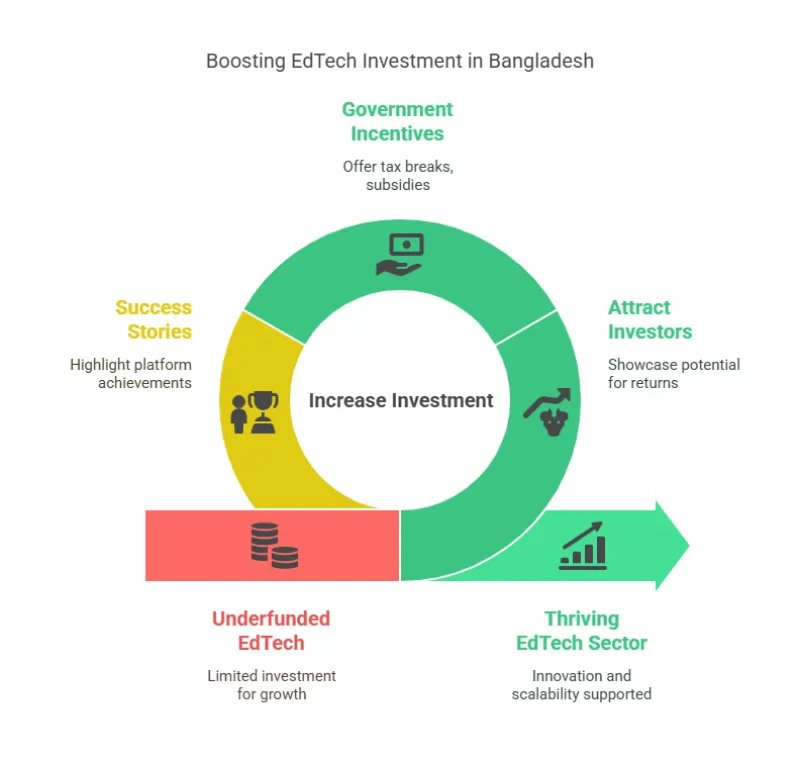
Despite this growth, investment in the sector remains modest. As of recent reports, EdTech startups in Bangladesh have secured only $18 million in investments, a stark contrast to neighbouring countries like India, which has attracted billions in the same domain. This disparity underscores the untapped potential and the need for increased funding to support innovation and scalability.


Drivers of Growth

Several factors contribute to the optimistic outlook for Bangladesh's EdTech industry:

  1. Demographic Advantage: With over 85 million young people, Bangladesh has a vast student population eager for quality education and skill development opportunities.

  2. Digital Infrastructure: The country's commitment to building a "Smart Bangladesh" by 2041 emphasizes the integration of technology across sectors, including education. Initiatives under this vision aim to enhance digital literacy and accessibility.

  3. Government Support: Programs like Startup Bangladesh Limited provide funding and resources to tech startups, including those in the education sector, fostering innovation and entrepreneurship.

  4. Changing Perceptions: The success of online learning during the pandemic has shifted public perception, making digital education a more accepted and preferred mode of learning for many.

Challenges Ahead

While the prospects are promising, the EdTech sector in Bangladesh faces several challenges:

  • Limited Investment: The current level of investment is insufficient to support the rapid growth and scaling required to meet national educational demands.

  • Infrastructure Gaps: Despite improvements, consistent internet access and digital device availability remain issues, particularly in rural areas.

  • Content Localization: Developing curriculum-aligned, culturally relevant content in the Bengali language is essential to ensure widespread adoption and effectiveness.

  • Regulatory Framework: A clear and supportive policy environment is necessary to guide the growth of EdTech, protect stakeholders, and ensure quality standards.

Future Outlook

Looking ahead, the EdTech industry in Bangladesh is expected to evolve in several key ways:

  • Personalised Learning: Integrating artificial intelligence and data analytics will enable more tailored educational experiences, addressing individual student needs and learning styles.

  • Hybrid Models: A blend of online and offline learning (blended learning) will become more prevalent, combining the strengths of traditional classrooms with digital tools.

  • Skill Development Focus: Beyond academic subjects, there will be a greater emphasis on vocational training and soft skills to prepare students for the evolving job market.

  • Global Collaboration: Partnerships with international EdTech companies and educational institutions will bring in best practices, technology, and content, enriching the local education ecosystem.

Conclusion

The EdTech industry in Bangladesh stands at a pivotal juncture. With strategic investments, supportive policies, and a focus on inclusivity and quality, digital education can play a transformative role in shaping the country's future. By addressing current challenges and leveraging its demographic and technological strengths, Bangladesh has the opportunity to become a leader in innovative education solutions in the region.


মন্তব্য করুন