
মুনজিলা আক্তার
ইন্সট্রাক্টর

১৪ আগস্ট, ২০২৫ ১০:৪০ পূর্বাহ্ণ
ইন্সট্রাক্টর
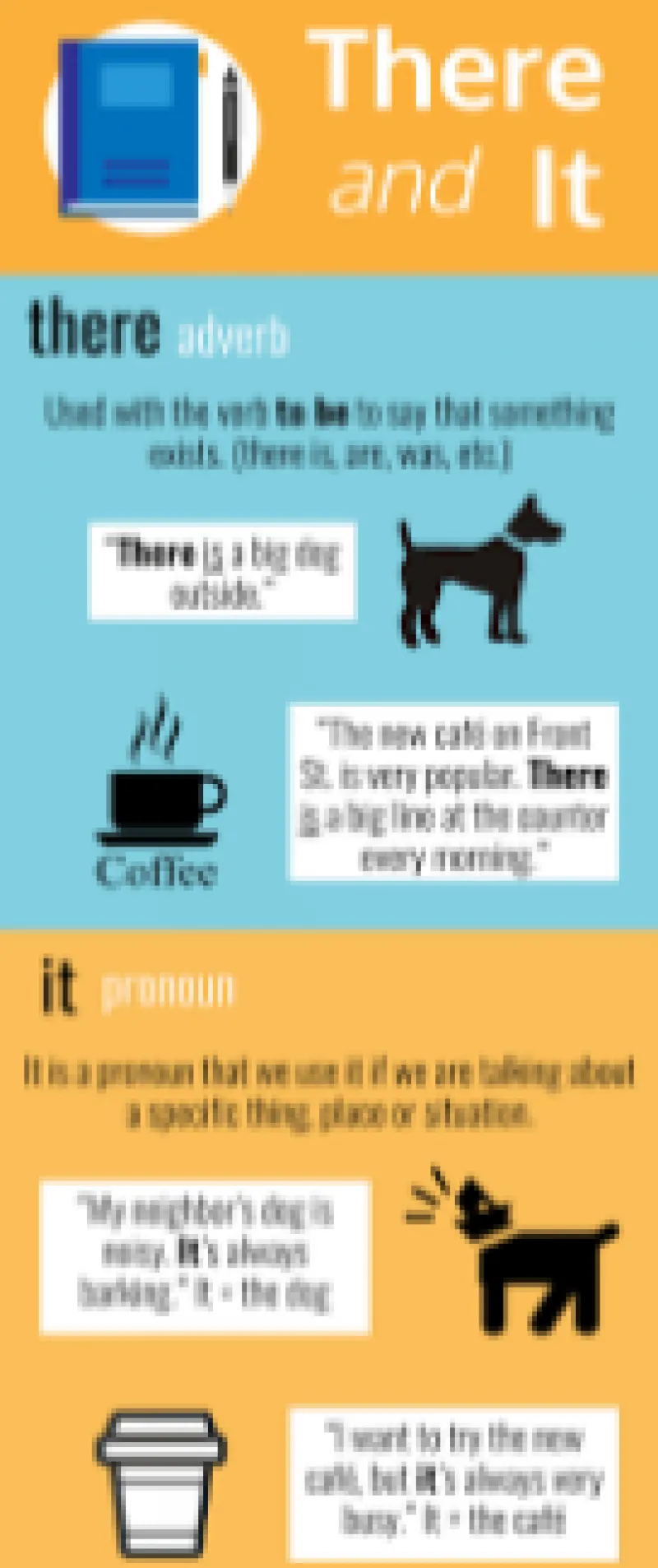
"There" and "it" can both act as introductory words in English sentences, often referred to as "dummy subjects" or "expletives". They don't have a specific meaning in these cases but are used to structure sentences, especially when the actual subject is a noun or clause that comes later in the sentence.
Introductory "There":
Function:
"There" is used to introduce the existence or presence of something.
Structure:
It's typically followed by a form of the verb "be" (is, are, was, were, etc.) and then the subject.
Example:
"There is a cat on the roof."
Note: "There" can also function as an adverb of place, but when used as an introductory word, it doesn't have this meaning.
Introductory "It":
Function:
"It" is used to introduce a clause or infinitive phrase that would otherwise be the subject of the sentence.
Structure:
It's followed by a form of "be" and then the clause or infinitive.
Example:
"It is important to study for the exam." (The clause "to study for the exam" is the real subject, but "it" introduces it).
Note:
"It" can also be used to refer to time, weather, distance, etc., but in introductory phrases, it's used as a grammatical device.
Key Differences:
"There" emphasizes existence or presence, while "it" emphasizes a clause or infinitive as the subject.
"There" is typically followed by a form of "be" and then the subject, while "it" is followed by "be" and then the clause or infinitive.
In essence: Both "there" and "it" can be used to begin sentences when the actual subject is placed later in the sentence. "There" is used to introduce the existence of something, while "it" is used to introduce a clause or infinitive as the subject.




১
১ মন্তব্য