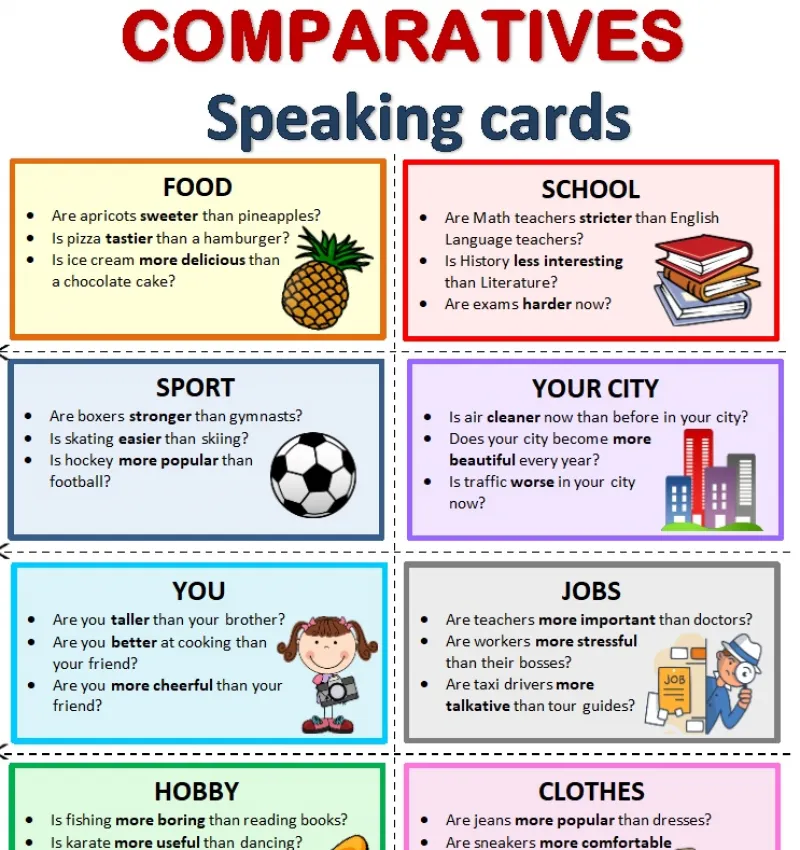
Speaking cards help users learn new words, practice pronunciation, and form sentences, significantly expanding their vocabulary and communication skills.
Enhances Cognitive Skills:
They encourage critical thinking as users interpret and respond to prompts, question information, and develop analytical and memory skills.
Increases Confidence:
Successfully describing pictures and answering questions builds confidence, making users more courageous and proactive in their communication.
Promotes Social Interaction:
When used with others, speaking cards facilitate conversation, teaching turn-taking and active listening, which helps foster positive relationships.
Creates Engaging Learning Experiences:
The interactive and playful nature of speaking cards keeps learners engaged and excited, making the learning process more enjoyable and effective.
Provides Visual Cues:
The visual nature of cards aids in understanding and recalling vocabulary and concepts, acting as a visual guide or a "roadmap" to keep the speaker on track.
Facilitates Practice:
They serve as a structured tool for practicing speaking, allowing learners to actively participate and internalize new language or information.
How They Help in Different Contexts
For Children:
Speaking cards help with early language acquisition, teaching basic conversation skills, building vocabulary, and encouraging imagination.
For Language Learners:
They are an effective tool for practicing speaking skills, reducing anxiety, and helping learners become more accurate and fluent.
For Public Speaking:
For professionals, speaking cards serve as visual backup notes, ensuring they remember key points without reading a long speech, which helps maintain engagement with the audience.






১৪
২১ মন্তব্য