
মোঃ ইফতেখারুল ইসলাম
সহকারী শিক্ষক

০১ অক্টোবর, ২০২৫ ০৯:৩৯ পূর্বাহ্ণ
সহকারী শিক্ষক
World Teachers’ Day
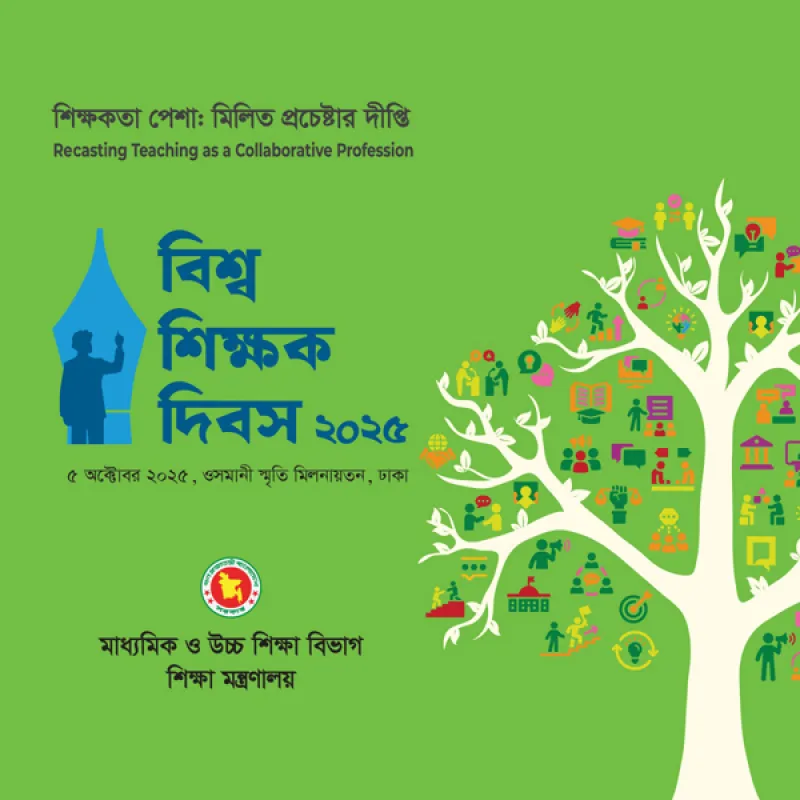
World Teachers’ Day, observed globally on October 5th, is a significant occasion dedicated to acknowledging the invaluable contributions of teachers in shaping individuals and societies. Established in 1994 by UNESCO, in partnership with the International Labour Organization (ILO), this day commemorates the adoption of the 1966 ILO/UNESCO Recommendation concerning the Status of Teachers, a landmark framework that set international standards for the rights, responsibilities, and working conditions of educators. Beyond being a ceremonial celebration, World Teachers’ Day is a platform to reflect upon the challenges faced by teachers and the necessity of supporting and empowering them to ensure quality education worldwide.
Teachers are often described as the architects of the future, for they mould young minds and cultivate the values, knowledge, and skills that enable individuals to thrive in life. A teacher is not merely a transmitter of information but also a mentor, guide, and role model who inspires students to think critically, act responsibly, and pursue lifelong learning. As Henry Adams once said, “A teacher affects eternity; he can never tell where his influence stops.
From the early stages of childhood to advanced academic levels, teachers influence intellectual, emotional, and social development. Their impact transcends the classroom, as they shape citizens who contribute to the progress of their communities and nations. Without teachers, no other profession would flourish, for every doctor, engineer, scientist, artist, or leader begins their journey under the guidance of an educator.
The celebration of World Teachers’ Day serves multiple purposes. On a symbolic level, it is an expression of gratitude to educators for their dedication, patience, and sacrifices. On a practical level, it draws global attention to the issues faced by teachers, such as inadequate pay, lack of resources, limited professional training, and the pressures of adapting to new technologies and changing curricula. As UNESCO reminds us, “Teachers are the single most influential factor in determining the quality of education."
The day emphasizes that improving the status of teachers is not merely a matter of fairness but a prerequisite for achieving the goals of quality education and sustainable development. By honouring teachers, societies reaffirm their commitment to education as a fundamental human right and a driver of social progress.
World Teachers’ Day is celebrated in diverse ways across countries. Schools, colleges, and universities organize special events such as cultural programs, debates, essay competitions, and award ceremonies to honour outstanding educators. Students express their appreciation by giving cards, flowers, or heartfelt messages. At the international level, UNESCO and education partners select an annual theme that highlights urgent issues affecting the teaching profession, such as digital learning, inclusive education, or the global teacher shortage.
Governments and organizations use the occasion to announce new initiatives, policies, or awards aimed at supporting teachers. Thus, the day becomes both a festive celebration and a moment of reflection and advocacy. As Dr. Sarvepalli Radhakrishnan, former President of India and a great teacher himself, said, “Teachers should be the best minds in the country.”
While teachers are deeply respected in many cultures, they often face significant challenges that hinder their ability to fulfill their roles effectively. In many countries, teachers struggle with low salaries, heavy workloads, inadequate training, and lack of recognition. The rapid growth of technology in education has also created both opportunities and difficulties, requiring teachers to constantly adapt to digital tools and online platforms.
Additionally, issues such as overcrowded classrooms, limited access to teaching materials, and social pressures can diminish their motivation. The COVID-19 pandemic further revealed the crucial role of teachers, as they adapted to remote learning despite limited support, highlighting the urgent need for better training, infrastructure, and professional respect. As Aristotle wisely noted, “Those who educate children well are more to be honoured than parents, for these only gave life, those the art of living well.”
World Teachers’ Day is far more than a ceremonial event; it is a global reminder of the indispensable role teachers play in shaping the destiny of individuals and nations. By celebrating this day, societies not only express gratitude but also acknowledge the pressing need to invest in education by empowering teachers with better training, fair compensation, and dignified working conditions.
As the world faces rapid changes in technology, economy, and culture, the role of teachers becomes even more critical. To secure a brighter future for generations to come, we must ensure that teachers are respected, supported, and celebrated every day—not just on October 5th. Truly, teachers are the backbone of education and the torchbearers of knowledge, guiding humanity toward progress and enlightenment. Or, as Albert Einstein beautifully expressed, “It is the supreme art of the teacher to awaken joy in creative expression and knowledge.






৫৩
৯২ মন্তব্য