
Anindhaya Biswas
সহকারী প্রোগ্রামার

১২ আগস্ট, ২০২৬ ০৯:৩০ অপরাহ্ণ
সহকারী প্রোগ্রামার
Piles, fistula, fissure and other colorectal problems are more common than most people realize. Many patients in Bangladesh still delay treatment because of embarrassment or fear of surgery. With the right specialist, most of these conditions can be diagnosed early and treated with low pain, minimally invasive techniques. This guide covers what a colorectal surgeon actually does, the warning signs you should never ignore, and how to find the best colorectal surgeon and piles doctor in Dhaka, Bangladesh.
A colorectal surgeon, sometimes called a proctologist in everyday conversation, is trained beyond general surgery to diagnose and treat disorders of the colon, rectum and anus. A general physician can spot a problem, but a colorectal surgeon has the specific training and surgical experience to properly treat conditions such as:
Piles (hemorrhoids), anal fistula, anal fissure, perianal abscess, rectal prolapse, constipation related disorders, colorectal cancer and polyps, and inflammatory bowel disease (IBD).
These conditions often share overlapping symptoms, so self diagnosis is risky. A qualified specialist examines you properly, rules out serious conditions like colorectal cancer, and recommends the least invasive treatment that actually works.
Piles (Hemorrhoids) Swollen veins in the lower rectum or anus that cause pain, itching and bleeding, especially during or after bowel movements.
Anal Fistula An abnormal tunnel that forms between the inside of the anus and the skin near it, usually following an infection.
Anal Fissure A small tear in the lining of the anus that often causes sharp pain during bowel movements.
Rectal Prolapse A condition where part of the rectum slips outside the anus, more common in older adults.
Colorectal Cancer One of the biggest reasons routine screening matters. Early stage colorectal cancer is highly treatable when it is caught in time.
Many patients wait months or even years before booking a consultation. See a specialist promptly if you notice any of the following:
Blood in stool or on tissue paper, persistent pain or discomfort around the anus, a lump or swelling near the anus, chronic constipation or straining, mucus discharge, unexplained weight loss along with changes in bowel habits, or a family history of colorectal cancer.
Ignoring these symptoms rarely makes them disappear. It usually just gives a simple, treatable condition time to become more complicated.
When you are searching for a colorectal surgeon in Dhaka, look past the "best doctor" label and check for a few real factors.
Specialized qualification matters first. Look for a formal fellowship or degree in colorectal or general surgery, not just general practice experience. Years of clinical experience come next, particularly hands on experience with piles, fistula and fissure cases. Access to modern treatment is also important, including laser hemorrhoidectomy and stapled hemorrhoidopexy instead of only traditional open surgery.
A good surgeon also gives you a transparent diagnosis and explains your condition clearly instead of rushing straight to surgery. Post operative care and follow up matter just as much as the procedure itself, and genuine patient reviews about pain management and recovery time can tell you a lot before you even walk into the clinic.
Advances in colorectal surgery mean most patients no longer need the long, painful hospital stays associated with older techniques. Depending on your diagnosis, treatment may include laser treatment for piles, which offers shorter recovery and minimal bleeding and is often done as a day care procedure. Other options include fistulotomy or the LIFT procedure for anal fistula, lateral internal sphincterotomy for chronic fissures, stapled hemorrhoidopexy for advanced piles, and conservative management through diet, medication and sitz baths for early stage cases.
A good specialist will always recommend the least invasive option that safely resolves the problem. Surgery is not always the first step.
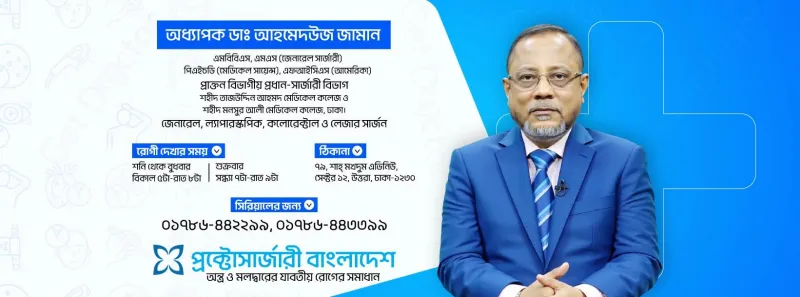
Among the specialists practicing in Dhaka, Prof. Dr. Ahamaduzzaman is known for combining formal colorectal surgical training with a modern, minimally invasive approach to treating piles, fistula and fissure. Patients researching a piles doctor in Dhaka usually look for a specialist who offers a clear diagnosis before recommending any procedure, along with laser piles treatment in Dhaka for faster recovery.
He also provides dedicated care for anal fistula and fissure cases, with easy appointment booking available for both new and follow up patients. If you are based in Dhaka and looking for a trusted, experienced colorectal surgeon, you can learn more about consultation options directly on Prof. Dr. Ahamaduzzaman's official website.
(Note: the links above currently point to the homepage as a placeholder. Swap them for the actual service page URLs, such as /piles treatment, /fistula treatment and /appointment, once you confirm them, so each anchor text links to its specific relevant page.)
Write down when your symptoms started and how they have changed over time. Avoid self medicating with random ointments before the visit, since that can mask real symptoms. Bring any previous test reports, such as colonoscopy results or blood work, if you have them. Prepare your questions about treatment options, recovery time and cost in advance, and be honest about your symptoms. The doctor has heard it all before.
Follow a high fiber diet to avoid straining, and stay well hydrated. Avoid sitting for long periods right after a procedure, and take prescribed sitz baths if your doctor recommends them. Attend every follow up appointment, even once you feel fully recovered, and avoid heavy lifting for as long as your surgeon advises.
1. Who is considered the best colorectal surgeon in Dhaka, Bangladesh? The best colorectal surgeon is someone with specialized surgical training, hands on experience treating piles, fistula and fissure, and access to modern minimally invasive techniques such as laser treatment.
2. What is the difference between a general surgeon and a colorectal surgeon? A general surgeon handles a wide range of surgical conditions, while a colorectal surgeon has additional focused training specifically in colon, rectal and anal disorders.
3. Is laser treatment for piles painful? Laser treatment for piles typically causes much less pain than traditional surgery and allows a faster return to normal activity.
4. How do I know if I have piles or something more serious? Only a proper physical examination by a specialist can confirm this. Bleeding, pain or a lump near the anus should always be checked rather than self diagnosed.
5. Can piles be treated without surgery? Yes. Early stage piles can often be managed with dietary changes, medication and lifestyle adjustments. Surgery is usually recommended only for advanced or persistent cases.
6. How long does recovery take after piles surgery? It depends on the procedure. Laser and other minimally invasive techniques often let patients resume normal activities within a few days, while traditional surgery can take longer.
7. Is an anal fistula the same as piles? No. An anal fistula is an abnormal tunnel connecting the anus to the skin, usually caused by infection, while piles are swollen veins in the anal or rectal area. Each requires a different treatment approach.
8. When should I see a piles doctor instead of waiting? As soon as you notice bleeding, persistent pain, a lump, or any change in bowel habits that lasts more than a few days.
9. Does colorectal cancer run in families? A family history of colorectal cancer raises your risk, which is why regular screening is recommended for people with that history even without symptoms.
10. How can I book an appointment with a colorectal surgeon in Dhaka? You can book a consultation directly through the official GMB of Prof. Dr. Ahamaduzzaman, where appointment details and contact information are listed.
Colorectal health is not something to be embarrassed about. It is a medical issue like any other, and delaying treatment usually makes things worse, not better. Whether you are dealing with piles, a fistula, or just want a screening for peace of mind, choosing an experienced, specialized colorectal surgeon in Dhaka is one of the most important decisions you can make for your long term health.
For patients in Dhaka looking for expert, modern colorectal care, Prof. Dr. Ahamaduzzaman offers specialized diagnosis and treatment for piles, fistula, fissure and related conditions.

১০ আগস্ট, ২০২৬


৭
৬ মন্তব্য