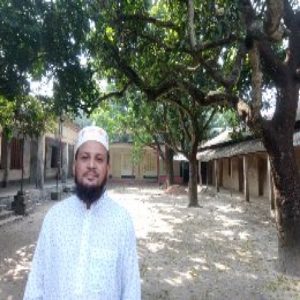
Mostafezur Rahman
সহকারী শিক্ষক


৩০ অক্টোবর, ২০২৬ ০৮:৪৭ অপরাহ্ণ
সহকারী শিক্ষক
Cooperative Learning and Prophetic Pedagogy: A Socio-Cognitive and Philosophical Synthesis for Modern Classrooms
Rahman, M. (2026). Cooperative learning and prophetic pedagogy: A socio-cognitive and philosophical synthesis for modern classrooms. ORCID ID: 0009-0003-6300-1705.
Author:
Mostafizur Rahman
Assistant Teacher (Islamic Studies)
Chowbaria Malshira High School, Tanore, Rajshahi, Bangladesh
Poet & Researcher
ORCID ID: 0009-0003-6300-1705
Dedicated to: The entire teaching community of Bangladesh.
Abstract
This academic paper explores the integration of Cooperative Learning paradigms with Prophetic Teaching Pedagogy (Halakah) within the secondary and higher secondary educational frameworks of Bangladesh. Drawing from John Dewey’s progressive philosophy, Lev Vygotsky’s Social Constructivism, and Robert Slavin’s cooperative structures, this study conceptualizes peer-assisted learning not merely as an instructional method, but as a holistic agent of socio-cognitive transformation. By eradicating individualistic ego and academic isolation, group-based learning creates a sustainable pathway for collective academic excellence—as evidenced by high transition rates to public universities and professional success. The paper provides a theoretical synthesis and a pragmatic action plan to institutionalize collaborative learning, transforming modern classrooms into spaces of empathy, critical thinking, and mutual human development.
Keywords: Cooperative Learning, Prophetic Pedagogy, Social Constructivism, Halakah, Pedagogical Action Plan, Social Skills.
Introduction
Education is inherently a dynamic socio-cultural process rather than the passive assimilation of isolated data by an individual mind. As John Dewey (1916) famously posited in his progressive educational philosophy, "Education is not preparation for life; education is life itself." When learners engage in structured, reciprocal dialogue to achieve shared intellectual goals, the process transcends traditional text-bound limits and manifests as "Cooperative Learning."
In the macro-educational context of developing nations like Bangladesh, longitudinal observations indicate that systematically implemented peer-study networks act as critical catalysts for reducing dropout rates, enhancing mathematical and linguistic fluencies, and fostering unprecedented collective success in tertiary education access. This paper synthesizes Modern Instructional Design, Prophetic Teaching Methodology (the pedagogical framework of Prophet Muhammad, PBUH), and socio-psychological theories to establish a unified framework for contemporary institutional execution.
Theoretical Framework and Socio-Cognitive Psychology
The foundational mechanics of cooperative learning are deeply anchored in Lev Vygotsky’s (1978) Social Constructivism. Vygotsky argued that cognitive development is fundamentally mediated by social interaction within the Zone of Proximal Development (ZPD). The ZPD defines the distance between a learner’s independent problem-solving capacity and the potential development achievable under adult guidance or in collaboration with more capable peers. In a structured group study environment, students fluidly alternate between being the recipient of scaffolding and acting as the peer instructor.
According to Robert Slavin’s (1995) cooperative learning theory, optimal group dynamics depend on two structural pillars: Group Goals and Individual Accountability. When a student explains complex mathematical grammar, scientific phenomena, or ethical constructs to a struggling classmate, their own cognitive retention skyrockets to approximately 90%, validating Edgar Dale’s (1969) Cone of Experience. Rather than relying on passive, rote-memorization regimes (what Paulo Freire termed the "Banking Concept of Education"), cooperative structures cultivate active learning environments where knowledge is co-constructed and permanently internalized.
Prophetic Pedagogy: The Philosophy of Collective Halakah
The historical antecedents of participatory education find a profound parallel in Prophetic Teaching Pedagogy. The instructional methodology of Prophet Muhammad (PBUH) fundamentally rejected one-way transmissive delivery, prioritizing instead collective welfare (Maslahah) and dialogic discovery. The primary structural unit of this pedagogy was the 'Halakah' or interactive discussion circle.
Prophetic pedagogy replaces hierarchical distance with mutual empathy, emotional resonance, and spiritual synergy. The core axiom of this methodology focuses on cognitive accessibility and psychological ease: "Facilitate things for people, and do not make them difficult" (Sahih al-Bukhari). The strategic philosophy of the Halakah aligns precisely with modern active-learning matrices; it deconstructs complex socio-ethical and logical dilemmas through collaborative dialectics. By operating within an framework of collective responsibility ("Help one another in acts of righteousness and piety" - Al-Qur'an, 5:2), it systematically replaces hyper-competitive anxiety with deep academic empathy.
Philosophical Synthesis and Structural Pillars
From a sociological perspective, hyper-individualized, competitive learning models often foster academic alienation and intellectual egoism. Conversely, cooperative learning operationalizes Jean-Jacques Rousseau’s concept of the Social Contract within the classroom ecosystem. It directly incorporates the five essential elements defined by David Johnson and Roger Johnson (2009):
1. Positive Interdependence: The psychological realization that individual success is structurally linked to the success of the collective cohort.
2. Promotive Interaction: Active face-to-face or group-based facilitation of each other's intellectual and conceptual progress.
3. Individual and Group Accountability: The dual responsibility of mastering one's designated domain while ensuring the entire group achieves its benchmark.
4. Social Skills: The deliberate cultivation of trust, active listening, democratic leadership, and constructive conflict resolution.
5. Group Processing: Continuous, metacognitive evaluation of the group’s operational efficiency to optimize future learning strategies.
Strategic Action Plan for Modern Classrooms
To effectively translate the theoretical intersections of Modern Cooperative Learning and Prophetic Halakah into modern schools, institutional administrators and educators should implement the following four-tier operational framework:
1. Heterogeneous Group Formations: Classrooms must be architected into diverse learning cells consisting of 4–5 students representing varied academic performance tiers, socio-economic backgrounds, and gender alignments. This prevents elitist grouping and mirrors the inclusive nature of the prophetic circle.
2. The Peer-Mentorship Cycle (Scaffolding): Implement a rotating system where students take turns leading discussions on core topics (e.g., mathematics, language, or ethics). The teacher transitions from the traditional "sage on the stage" to a facilitator or supervisor of the active cells.
3. Holistic Evaluation Systems: Assessment metrics must adapt to evaluate both individual test performance and collective group advancement. Rewards and recognitions should be tied to the progress of the lowest-performing member of the group, ensuring collective accountability.
4. Social-Emotional Integration: Dedicate specific instructional periods to reinforcing core ethical values—such as humility, empathy, and respect for manual labor—ensuring that intellectual growth is always balanced by human character development.
Conclusion
Education is neither a commercial trademark nor a transactional corporate brand; it is the deliberate cultivation of human character and societal transformation. The integration of socio-cognitive learning paradigms with the foundational tenets of Prophetic pedagogy offers a rigorous, replicable model for contemporary education. By institutionalizing structured peer-study networks, educational ecosystems can eradicate academic isolation and social fragmentation, replacing them with equity, critical thought, and shared human prosperity. This paper serves as both a theoretical affirmation and an institutional blueprint dedicated to the transformative, quiet labor of the global teaching community.
References
· Dale, E. (1969). Audio-visual methods in teaching (3rd ed.). Dryden Press.
· Dewey, J. (1916). Democracy and education: An introduction to the philosophy of education. Macmillan.
· Freire, P. (1970). Pedagogy of the oppressed. Herder and Herder.
· Johnson, D. W., & Johnson, R. T. (2009). An educational psychology success story: Social interdependence theory and cooperative learning. Educational Researcher, 38(5), 365-379.
· Slavin, R. E. (1995). Cooperative learning: Theory, research, and practice (2nd ed.). Allyn & Bacon.
· Vygotsky, L. S. (1978). Mind in society: The development of higher psychological processes. Harvard University Press.




১
২ মন্তব্য