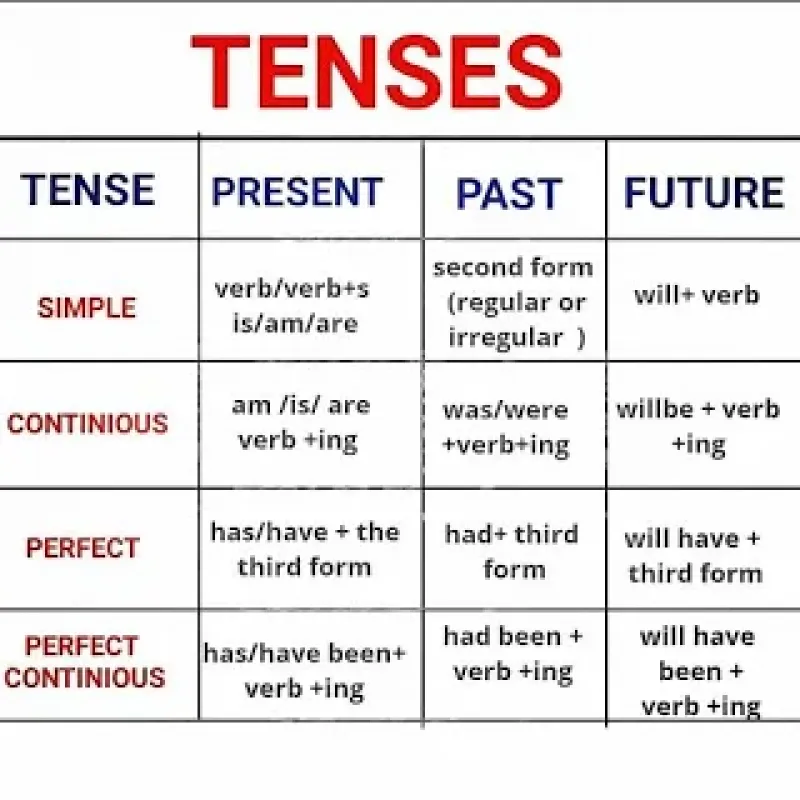
The word tense has two main meanings: one in grammar and one as an adjective describing a state of being.
Tense as a grammatical term
In grammar, a tense is the form of a verb that shows the time of an action or state of being. The three primary tenses are:
- Present Tense: Describes an action happening now, something that is habitually true, or a scheduled future event.
- Example: "She is eating breakfast."
- Example: "The train arrives at 8 a.m."
- Past Tense: Describes a completed action that took place before the present.
- Example: "We watched a movie yesterday."
- Example: "He went to the store."
- Future Tense: Describes an action that will happen in the future.
- Example: "I will travel next week."
- Example: "She will be studying for her exams."
Each of these three primary tenses can be further divided into four aspects: simple, continuous (or progressive), perfect, and perfect continuous. This creates a total of 12 main verb tenses in English.
Tense as an adjective
As an adjective, tense can describe a person or a situation.
- Describing a person: Feeling nervous, anxious, or worried and unable to relax.
- Example: "He was very tense as he waited for his interview."
- Describing a situation: Causing feelings of worry, anxiety, or suspense.
- Example: "There was a tense silence in the room."
- Describing muscles: Stretched tight or rigid.
- Example: "A massage can help relax tense muscles."